logo
منزل أخبار

أخبار الشركة عن Dell and data physics

شهادة
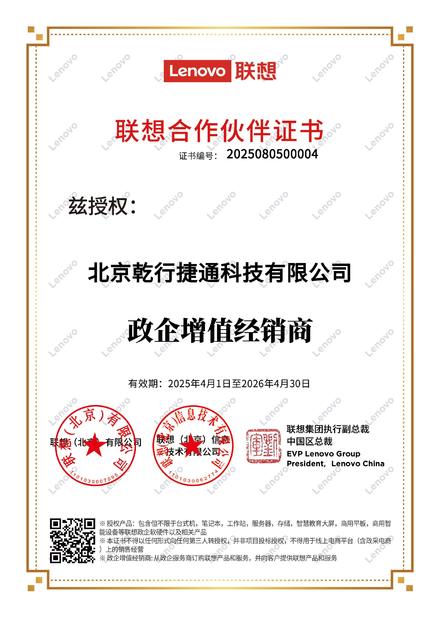
الصين Beijing Qianxing Jietong Technology Co., Ltd. الشهادات
زبون مراجعة
موظفو المبيعات في Beijing Qianxing Jietong Technology Co. ، Ltd محترفون وصبورون للغاية. يمكنهم تقديم الاقتباسات بسرعة. كما أن جودة المنتجات وتعبئتها جيدة جدًا. تعاوننا سلس للغاية.

—— 《Festfing DV LLC

عندما كنت أبحث عن وحدة المعالجة المركزية Intel CPU و Toshiba SSD بشكل عاجل ، أعطتني Sandy من Beijing Qianxing Jietong Technology Co.، Ltd الكثير من المساعدة وحصلت على المنتجات التي أحتاجها بسرعة. أنا حقا أقدرها.

—— كيتي ين

ساندي من بكين Qianxing Jietong Technology Co. ، Ltd هو بائع دقيق للغاية ، يمكنه تذكيرني بأخطاء التكوين في الوقت المناسب عندما أشتري خادمًا. المهندسون محترفون للغاية ويمكنهم إكمال عملية الاختبار بسرعة.

—— ستريلكين ميخائيل فلاديميروفيتش

نحن سعداء جدًا بتجربتنا في العمل مع شركة بكين تشيانشينغ جيتونغ. جودة المنتج ممتازة، والتسليم دائمًا في الموعد المحدد. فريق المبيعات لديهم محترف، صبور، ومفيد جدًا في الإجابة على جميع أسئلتنا. نحن نقدر حقًا دعمهم ونتطلع إلى شراكة طويلة الأمد. موصى به بشدة!

—— أحمد نافيد

الجودة: تجربة رائعة مع موردي. كانت ميكروتيك RB3011 مستخدمة بالفعل، لكنها كانت في حالة جيدة جدا وكل شيء يعمل بشكل مثالي. التواصل كان سريعا وسلاسة،وكل مخاوفي تمت معالجتها بسرعةمُزود موثوق به جداً

—— جيران كوليسيو

ابن دردش الآن
الشركة أخبار
Dell and data physics

Dell contends single-namespace AI storage architectures clash with enterprise distributed data gravity realities, forcing GPUs to stall waiting for data due to unaddressed architectural limitations.

آخر أخبار الشركة Dell and data physics  0

At its core lies a fundamental choice: should data travel to the compute platform, or should the platform go to where data resides? Jon Hyde, Dell Senior Director of Competitive Intelligence, makes the case for federated AI data platforms over centralized storage-integrated stacks across three blog posts.

In his first post, Hyde argues massive datasets carry inherent data gravity that locks them in their original locations—core datacenters, edge sites, sovereign compliance regions, SaaS environments, data warehouses, and business-unit-owned object stores. Dubbed the simplest rule of enterprise AI, his thesis states data stays where it lands, and most will never be relocated.

Numerous enterprise IT frictions block clean unified data architectures: regulatory and sovereignty rules, application lock-in, competing data ownership, contractual and cost barriers, M&A data fragmentation, compliance-locked archives, uncataloged unknown data, and internal organizational silos.

He categorizes data into three distinct forms:
  1. Raw data (heavyweight): Files, records, imagery, video, telemetry, regulated tables. Bulky, slow and costly to move, remaining in situ for tangible operational reasons.
  2. Metadata (descriptive layer): Tags, lineage, schemas, classifications, ownership markers. Lightweight and cheap to replicate, enabling AI visibility into all assets without physical data movement.
  3. Vectors (semantic representation): AI-generated mathematical embeddings, locality-aware and GPU-aligned. They transmit contextual meaning across environments without transporting underlying raw data.

Hyde notes AI does not require raw data movement—only accessible metadata and vectors. A metadata catalog delivers full cross-system asset visibility for AI workloads, while vector indexes power cross-environment semantic reasoning. Restricted, owned, latency-sensitive heavy raw data stays put, governed by its existing operational teams. Vectors feature locality sensitivity and GPU proximity: either raw data migrates to vectorization endpoints, or data is embedded locally before vectors shift to GPU-adjacent infrastructure. This framing underpins his full argument.

Inherently distributed enterprise data splits AI data layer design into two opposing philosophies:
  • Storage-integrated stacks (exemplified by VAST AI OS): Built around centralizing large datasets within a vendor-controlled unified namespace, tightly coupling embedded AI services for streamlined operations. This model assumes data will migrate to the platform to justify consolidation, and works well for greenfield AI deployments.
  • Federated AI data platforms (Dell’s framework): Designed around the premise that enterprise data remains permanently distributed, requiring the platform to operate alongside data’s native locations. Dell’s AI Data Platform combines PowerScale and ObjectScale with a federated control plane to access and process data across file systems, object storage, warehouses, SaaS tools and public clouds—no mandatory centralized data copies. It treats raw data, metadata and vectors as separate first-class entities, governs all three consistently, and leverages lightweight metadata and vectors to deliver value while heavy raw data stays in place.

Hyde’s second blog critiques storage-integrated architectures like VAST AI OS for ignoring distributed enterprise data realities. These stacks operate on one rigid premise: all AI processing runs exclusively on data ingested into their proprietary namespace, rendering external data invisible to the platform. Vendors supply migration tooling, market consolidation as an operational simplifier, and unified UIs that mask fragmented real-world data landscapes during demos.

Architectures lumping raw data, metadata and vectors into a single monolithic category default to the flawed mandate of mass data migration. Frameworks that differentiate the three layers leave regulated heavy data governed locally, replicate metadata enterprise-wide, and use vectors for cross-environment AI reasoning. A unified namespace only works if raw data is the sole considered asset; it becomes ineffective once metadata and vectors are recognized as independent core components.

Dell’s federated architecture operates on three core principles:
  • Raw data remains in its native location under existing governance teams
  • Metadata replicates globally, granting all AI workloads full cross-location asset visibility
  • Vectors carry semantic context across the environment, enabling AI reasoning without raw data relocation

Hyde’s third post proves Dell’s federated design outperforms VAST’s storage-integrated stack in feeding data to GPUs. Dell released side-by-side October 2025 testing on vector KV cache offloading workloads using the Qwen3-32B model, drawing on internal Dell benchmarks and public VAST disclosures:
  • PowerScale: 0.82s Time to First Token (TTFT)
  • ObjectScale: 0.86s TTFT
  • VAST: 1.5s TTFT
  • Baseline vLLM without KV cache offloading: 11.8s TTFT

He states architectures built around GPU delivery—treating raw data as gravity-bound and portable semantic vectors as the transportable layer—amplify Dell’s performance edge with every inference request. Designs dependent on ingesting raw data into a proprietary namespace suffer structural inherent delays.

Hyde acknowledges VAST has published updated KV cache offloading results, most notably December 2025 benchmarks with Nvidia Dynamo and CoreWeave citing ~20x faster TTFT vs recompute and 90% higher GPU efficiency. However, these tests use distinct workloads and baselines, with no matching Qwen3-32B head-to-head beating the published 1.5s VAST TTFT figure.

He urges enterprises selecting GPU-targeted data architectures to pose a critical question: “What GPU utilization will this platform deliver on realistic inference workloads with KV cache offloading, against mixed datasets including regulated, sovereign and application-locked sources?”

This query forces vendors to address fundamental structural tradeoffs, explain performance limitations when data cannot be ingested into their namespaces, publish reproducible TTFT, tokens-per-second and cache hit rate metrics on modern open-source models with full methodology, and honestly answer the pivotal financial concern: how much GPU idle time does this architecture create?

Commentary

Vectorized datasets vastly outsize their source raw data. Embeddings often multiply original source volume 3–20x or more per record, varying by text chunk size, embedding dimensionality and storage formats. Source datasets are split into discrete chunks (paragraphs, fixed token windows) pre-embedding for superior retrieval accuracy. A standard text chunk of 250–500 words equates to roughly 0.5–2KB raw text, with its corresponding vector frequently 3–10x larger.

Key unresolved question: Where does vectorization take place, and are oversized vector datasets relocated if generated far from GPUs? Their substantial bulk creates its own data gravity. Teams either shift raw data to embedding infrastructure or move full vector sets to AI compute, battling data gravity in both scenarios. We have flagged this contradiction to Jon Hyde for further clarification.

Beijing Qianxing Jietong Technology Co., Ltd.
Sandy Yang/Global Strategy Director
WhatsApp / WeChat: +86 13426366826
Email: yangyd@qianxingdata.com
Website: www.qianxingdata.com/www.storagesserver.com
Business Focus:
ICT Product Distribution/System Integration & Services/Infrastructure Solutions
With 20+ years of IT distribution experience, we partner with leading global brands to deliver reliable products and professional services.
“Using Technology to Build an Intelligent World”Your Trusted ICT Product Service Provider!

حانة وقت : 2026-06-23 13:54:14 >> أخبار قائمة ميلان إلى جانب
تفاصيل الاتصال
Beijing Qianxing Jietong Technology Co., Ltd.

اتصل شخص: Ms. Sandy Yang

الهاتف :: 13426366826

إرسال استفسارك مباشرة لنا (0 / 3000)